TFCC Tear
Reviewed by Dr. Vipul Patel
TFCC Tear Treatment in Manhattan, Brooklyn, Queens and Englewood, NJ
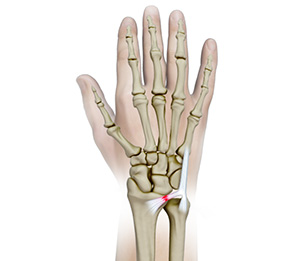
Pain on the pinky side of your wrist, especially when you turn a doorknob, lift a pan or push up from a chair, may come from a tear of the triangular fibrocartilage complex (TFCC). Some tears follow a fall or a twisting injury, while others develop gradually with age and repetitive use.
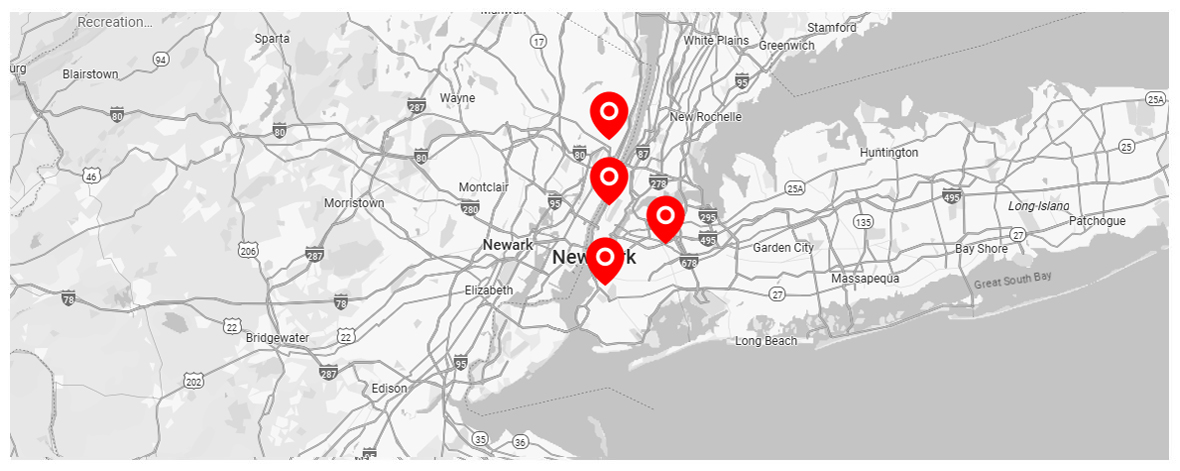
We evaluate and treat TFCC tears at our offices on the Upper West Side of Manhattan, in Park Slope, Brooklyn, in Elmhurst, Queens, and in Englewood, NJ, with care that ranges from splinting and therapy to arthroscopic surgery when needed.
What Is a TFCC Tear?
The TFCC is a group of ligaments and cartilage on the ulnar (small-finger) side of the wrist. It cushions the joint between the ulna and the small wrist bones and helps stabilize the distal radioulnar joint, which lets your forearm rotate.
Types of TFCC Tears
- Traumatic tears: caused by a fall on an outstretched hand, a sudden twist or a forceful pull, sometimes alongside a wrist fracture
- Degenerative tears: wear-related thinning or tearing, often linked with ulnar impaction, where the ulna sits relatively long and presses on the wrist
Symptoms of a TFCC Tear
- Aching or sharp pain on the small-finger side of the wrist
- Pain with gripping, twisting or bearing weight on the hand
- Clicking or popping with forearm rotation
- Weak grip
- A sense that the wrist is unstable
How a TFCC Tear Is Diagnosed
Diagnosis begins with a careful history and examination of the ulnar side of your wrist. X-rays can show ulnar length and rule out fractures, and an MRI may help show the tear. In some cases, wrist arthroscopy is used to confirm the diagnosis and treat the tear in the same procedure. Other causes of ulnar-sided wrist pain are considered along the way.
Nonsurgical Options to Try First
Many TFCC tears improve without surgery. Options may include a wrist brace or cast for several weeks, activity changes, anti-inflammatory medication, a corticosteroid injection and hand therapy to restore motion and strength.
When Surgery May Be Recommended
Surgery may be considered when pain persists after a period of nonsurgical care, when the distal radioulnar joint is unstable, or when ulnar impaction is contributing to the tear.
Surgical Options That May Be Considered
- Arthroscopic debridement: smoothing frayed tissue through small incisions
- TFCC repair: reattaching a torn edge, arthroscopically or through a small open incision
- Ulnar shortening osteotomy: shortening the ulna to reduce pressure when impaction is present
Recovery
After debridement, motion often begins soon. After repair, the wrist and forearm are usually protected in a splint or cast for a period, followed by guided therapy. Your surgeon will outline a timeline based on the procedure performed.
Why Choose Dr. Patel for TFCC Tear Care?
Dr. Vipul Patel, MD, FAAOS, is a fellowship-trained hand and upper extremity surgeon who focuses on acute and chronic wrist pain. He trained at Harvard/Massachusetts General Hospital and takes a shared decision-making approach to every treatment plan.
TFCC Tear FAQs
Can a TFCC tear heal on its own?
Some tears, particularly those in areas with good blood supply or smaller degenerative tears, can become less painful with bracing and rest. Others need surgery if pain or instability continues despite nonsurgical care.
Is a TFCC tear the same as a wrist sprain?
A TFCC tear can follow the same kind of injury as a wrist sprain, but it involves specific cartilage and ligaments. If your ulnar wrist pain lasts more than a few weeks, an evaluation may help.
Will I need an MRI?
Not always. Your examination and X-rays may guide early treatment. An MRI may be recommended if symptoms persist or if surgery is being considered.
Request an Appointment
If pinky-side wrist pain is slowing you down, request an appointment at our Manhattan, Brooklyn, Queens or Englewood, NJ office to discuss your TFCC treatment options.