Arm, Elbow
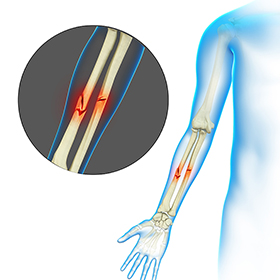
Broken Arm
The forearm is made up of 2 bones namely the radius and ulna. The primary function of your forearm is rotation i.e., the ability to turn your palms up and down. The fracture of the forearm affects the ability to rotate your arm, as well as bend and straighten the wrist and elbow. The breaking of the radius or ulna in the middle of the bone requires a strong force and it is most commonly seen in adults. In most of the cases, both bones are broken during a forearm fracture.

Radial Head Fractures
The elbow is a junction between the forearm and the upper arm. The elbow joint is made up of 3 bones namely the humerus bone in the upper arm which joins with the radius and ulna bones in the forearm. The elbow joint is essential for the movement of your arms and to perform daily activities. The head of the radius bone is cup-shaped and corresponds to the spherical surface of the humerus.
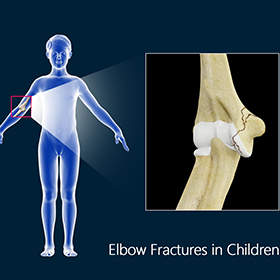
Elbow Fractures in Children
The elbow is a joint that consists of three bones – the humerus (upper arm bone), radius (forearm bone) and ulna (forearm bone). An elbow fracture most commonly occurs when your child falls on an outstretched arm. It can lead to severe pain in the elbow and numbness in the hand. Fractures are more common in children due to their physical activities as well as their bone properties.
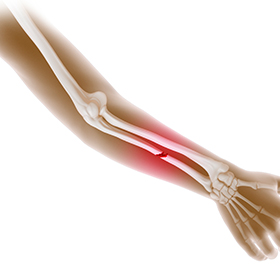
Forearm Fractures in Children
The radius (bone on the thumb side) and ulna (bone on the little-finger side) are the two bones of the forearm. Forearm fractures can occur near the wrist, near the elbow or in the middle of the forearm. Apart from this, the bones in children are prone to a unique injury known as a growth plate fracture. The growth plate, which is made of cartilage (flexible tissue) is present at the ends of the bones in children and helps in the determination of length and shape of the mature bone.

Olecranon (Elbow) Fractures
Three bones-humerus, radius, and ulna-make up the elbow joint. The bones are held together by ligaments thus providing stability to the joint. Muscles and tendons around the bones coordinate the movements and help in performing various activities. Elbow fractures may occur from trauma resulting from a variety of reasons, some of them being a fall on an outstretched arm, a direct blow to the elbow, or an abnormal twist to the joint beyond its functional limit.