Nerve Decompression vs. Nerve Transfer
Reviewed by Dr. Vipul Patel
Nerve Surgery in Manhattan, Brooklyn, Queens and Englewood, NJ
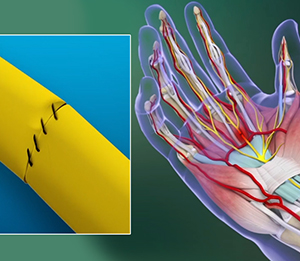
Numbness, weakness or loss of function in your hand or arm can come from a nerve that is compressed or a nerve that has been injured. Two very different surgical strategies, nerve decompression and nerve transfer, may be used depending on the problem. Understanding the difference can help you ask the right questions.
We evaluate nerve conditions of the hand and upper extremity at our offices on the Upper West Side of Manhattan, in Park Slope, Brooklyn, in Elmhurst, Queens, and in Englewood, NJ.
What Is Nerve Decompression?
Nerve decompression relieves pressure on a nerve that is being squeezed by surrounding tissue. Common examples include carpal tunnel release and cubital tunnel release. The nerve itself is intact, and surgery creates more room so it can recover.
What Is Nerve Transfer?
Nerve transfer surgery redirects a working nerve, or a branch of one with a less critical job, to a nearby nerve that has lost function. Because the new connection is placed closer to the target muscle or skin, regrowing nerve fibers have a shorter distance to travel. Nerve transfers are used for more severe injuries, such as brachial plexus injuries or nerve damage high in the arm.
How the Two Approaches Compare
- Problem treated: decompression for nerve compression; transfer for nerve injury or loss of function
- Nerve condition: decompression assumes the nerve can recover once pressure is relieved; transfer is used when recovery is unlikely without a new nerve source
- Timing: decompression can often be planned electively; transfers are time-sensitive because muscles may not recover if they go too long without nerve input
- Recovery: decompression symptoms may improve over weeks to months; transfers usually involve months of nerve regrowth and retraining
When Is Each Recommended?
Decompression may be considered when compression symptoms persist despite nonsurgical care or nerve testing shows significant compression. Nerve transfer may be considered when a nerve injury has not shown expected recovery, or when the distance from injury to muscle is too long for a timely recovery. In some cases, both are combined, along with peripheral nerve repair.
Not every nerve problem needs surgery. Dr. Patel can review your symptoms and testing to explain which approach, if any, may help.
How Are They Evaluated?
Evaluation usually includes a detailed examination of strength and sensation, nerve conduction studies and electromyography, and sometimes imaging. Repeat testing over time can help show whether a nerve is recovering on its own.
What Are the Risks?
- Infection
- Persistent numbness or weakness
- Incomplete recovery
- Scar tenderness
- Weakness related to the donor nerve after a transfer
- Need for further surgery
Your surgeon can discuss these risks based on your individual condition.
Why Choose Dr. Patel for Nerve Surgery?
Dr. Vipul Patel, MD, FAAOS, is a board-certified orthopedic surgeon with fellowship training in hand, upper extremity and microvascular surgery at Harvard/Massachusetts General Hospital and additional microsurgery training at Columbia University. His practice treats nerve injuries and compression syndromes.
Nerve Decompression vs. Nerve Transfer FAQs
Why does timing matter for nerve transfers?
Muscles that go without nerve input for too long may lose their ability to respond, even if a nerve later reaches them. That is why significant nerve injuries are best evaluated early.
Is carpal tunnel release a nerve decompression?
Yes. Carpal tunnel release is one of the most common nerve decompression procedures. It relieves pressure on the median nerve at the wrist.
Will I lose function from the donor nerve?
Donor nerves are chosen because their original function can usually be spared or compensated for. Your surgeon will explain any expected trade-offs for the specific transfer planned.
Request an Appointment
If you have ongoing numbness or weakness, request an appointment at our Manhattan, Brooklyn, Queens or Englewood, NJ office to discuss your nerve treatment options.