Extensor Tendon Injuries
Reviewed by Dr. Vipul Patel
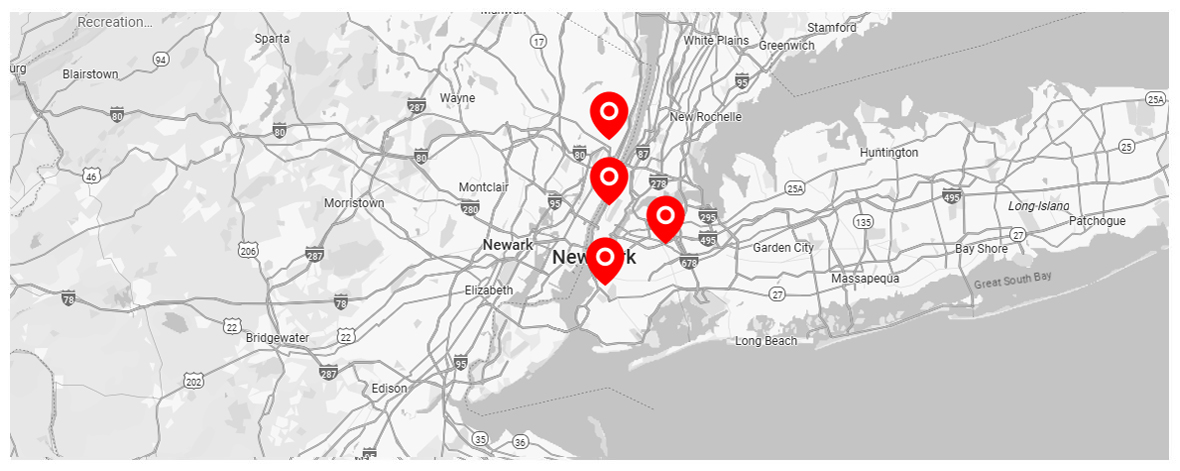
Extensor Tendon Injury Treatment in Manhattan, Brooklyn, Queens and Englewood, NJ
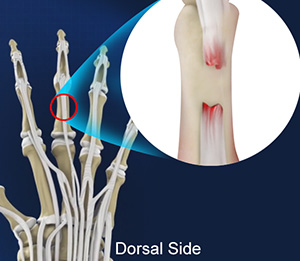
The extensor tendons on the back of your hand and fingers let you straighten your fingers and thumb. Because they lie just under the skin, they are easily injured by cuts, jams and crush injuries, and the result can be a finger that droops or will not straighten fully.
We treat extensor tendon injuries at our offices on the Upper West Side of Manhattan, in Park Slope, Brooklyn, in Elmhurst, Queens, and in Englewood, NJ. Many can be managed with splinting, while others need repair.
What Is an Extensor Tendon Injury?
An extensor tendon injury is a cut, tear or rupture of one of the tendons that straighten the fingers, thumb or wrist. Hand surgeons describe these injuries by zone, from the fingertip to the forearm, because treatment differs by location.
Types of Extensor Tendon Injuries
- Mallet finger: the fingertip droops after the tendon tears at the end joint
- Boutonnière deformity: injury over the middle joint causes it to bend while the tip hyperextends
- Sagittal band injury: the tendon slips off the knuckle, causing snapping
- Lacerations: cuts over the back of the hand or fingers
- Fight bite: a cut over a knuckle from contact with teeth, which carries a high infection risk
Symptoms
- Inability to fully straighten a finger or thumb
- A drooping fingertip or bent middle joint
- Pain, swelling and bruising on the back of the hand
- Snapping of a tendon over the knuckle
How Extensor Tendon Injuries Are Diagnosed
Your surgeon examines how each joint straightens, checks the wound if present, and orders X-rays to look for associated fractures or foreign material.
Nonsurgical Options to Try First
Many closed injuries, including most mallet fingers and early boutonnière injuries, are treated with continuous splinting for several weeks, followed by a gradual weaning period and exercises.
When Surgery May Be Recommended
Surgery may be recommended for most lacerations, for injuries with large or displaced fractures, for tendons that have slipped off the knuckle and do not respond to splinting, and for fight bites that need cleaning.
Surgical Options That May Be Considered
- Direct tendon repair: stitching the cut ends together
- Pinning or fixation: for associated fractures
- Sagittal band repair or reconstruction: to recenter the tendon
- Tendon reconstruction or transfer: for chronic injuries
Recovery
Recovery involves a period of splinting and, often, guided hand therapy. Strict adherence to splinting is important, because bending the joint too early can undo the healing.
Why Choose Dr. Patel for Extensor Tendon Injuries?
Dr. Vipul Patel, MD, FAAOS, is a fellowship-trained hand and upper extremity surgeon whose practice treats tendon injuries affecting motion and strength. He teaches orthopedic residents at NYU Langone Orthopedic Hospital and NewYork-Presbyterian Brooklyn Methodist Hospital.
Extensor Tendon Injury FAQs
Can I take my splint off to shower?
Usually only if your surgeon or therapist shows you how to keep the finger straight while doing so. Bending the joint even briefly can disrupt healing in many extensor injuries.
Is a knuckle cut from a punch serious?
It can be. Cuts from contact with teeth carry bacteria into the joint and tendon and may need prompt cleaning and antibiotics. Seek care the same day.
What if I waited weeks before getting treatment?
Many extensor injuries can still be treated after a delay, though options may change. An evaluation can help determine whether splinting or surgery is more appropriate.
Request an Appointment
If you cannot fully straighten a finger after an injury, request an appointment at our Manhattan, Brooklyn, Queens or Englewood, NJ office to discuss your extensor tendon treatment options.