CMC (Basal Thumb) Arthritis and LRTI Surgery
Reviewed by Dr. Vipul Patel
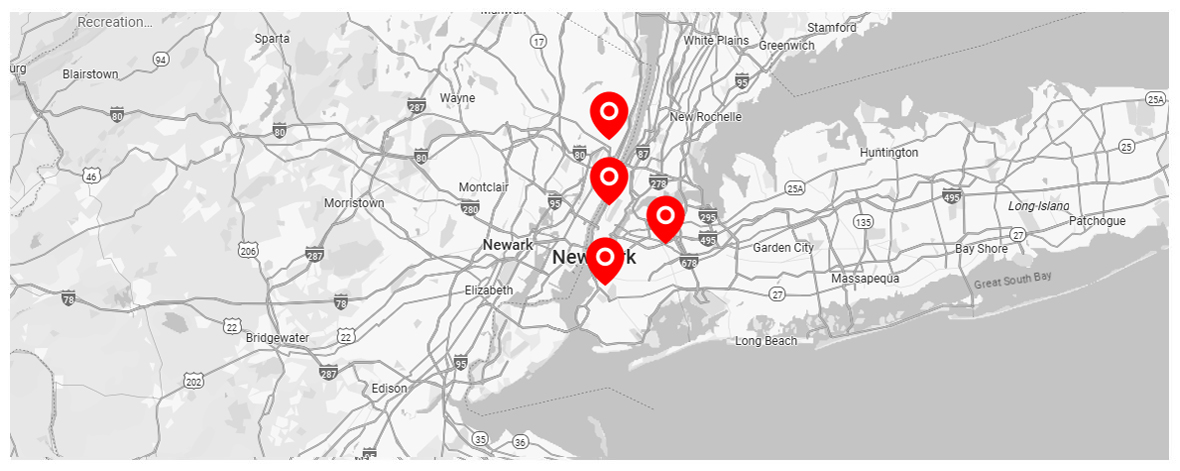
CMC Thumb Arthritis Care in Manhattan, Brooklyn, Queens and Englewood, NJ
Pain at the base of your thumb can make simple tasks like opening a jar, turning a key or pinching a zipper feel difficult. This is often caused by arthritis of the carpometacarpal (CMC) joint, also called basal joint arthritis. It is one of the most common forms of arthritis in the hand.
At New York Hand & Orthopedic Surgery, we start with treatments that protect the joint and ease pain, and we discuss surgery such as ligament reconstruction and tendon interposition (LRTI) only when those measures no longer help. We treat thumb arthritis at our offices on the Upper West Side of Manhattan, in Park Slope, Brooklyn, in Elmhurst, Queens, and in Englewood, NJ.
What Is CMC Thumb Arthritis?
The CMC joint sits where the thumb metacarpal meets a small wrist bone called the trapezium. Its saddle shape gives the thumb its wide range of motion, but it also places high stress on the joint surfaces. Over time, the cartilage can wear down and the supporting ligaments can loosen, leading to pain, swelling, stiffness and loss of pinch strength.
In more advanced stages, the thumb base may look enlarged or shifted, and the joint above it can begin to hyperextend to compensate. Women and people over 50 are affected more often, and prior injury can also play a role. You can read more about related conditions on our arthritis of the hand and wrist page.
When Is LRTI Surgery Recommended for CMC Arthritis?
Many patients improve with nonsurgical care, which may include:
- Thumb splints, especially at night or during heavy use
- Activity changes and adaptive tools for gripping
- Anti-inflammatory medication, if appropriate for you
- Corticosteroid injection into the joint
- Hand therapy for joint protection and strengthening
Surgery may be considered when:
- Pain continues despite several months of nonsurgical treatment
- Pinch and grip weakness limit work or daily activities
- X-rays show advanced joint changes that match your symptoms
- The thumb base is unstable or visibly deformed
Not every patient with thumb arthritis requires surgery. Dr. Patel can evaluate your thumb and explain which options fit your goals.
How Is LRTI Surgery Performed?
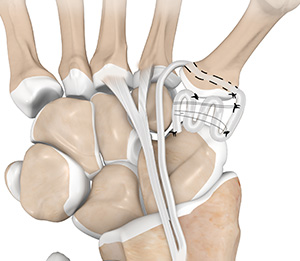
LRTI is one of the most widely used procedures for advanced basal joint arthritis. The surgeon removes all or part of the arthritic trapezium (trapeziectomy), which eliminates the painful bone-on-bone contact. A portion of a nearby tendon, often the flexor carpi radialis, may then be used to reconstruct the ligament that stabilizes the thumb metacarpal and to cushion the space left behind.
Other techniques may be considered depending on your anatomy and activity level, such as trapeziectomy alone, suspensionplasty or joint fusion. Your surgeon can explain the reasoning behind the approach recommended for you.
What to Expect During Recovery After LRTI Surgery
Recovery happens in stages. At first, your thumb is protected in a splint or cast while the reconstruction heals. Next, a hand therapist guides you through gentle motion and then gradual strengthening, usually with a removable splint. Light activities often return before heavy gripping, and strength may continue to improve for several months. Your surgeon will set your timeline based on how you heal.
What Are the Risks of LRTI Surgery?
As with any surgery, possible risks include:
- Infection or wound healing problems
- Stiffness of the thumb or wrist
- Irritation of small nerve branches near the incision
- Tendon irritation
- Persistent or recurrent pain
- Reduced pinch strength compared with an unaffected thumb
- Complex regional pain syndrome, which is uncommon
Your surgeon can discuss these risks based on your individual condition.
Why Choose Dr. Patel for Thumb Arthritis Care in New York?
Dr. Vipul Patel, MD, FAAOS, is a board-certified orthopedic surgeon who completed fellowship training in hand, upper extremity and microvascular surgery at Harvard/Massachusetts General Hospital. He serves as an Assistant Professor of Orthopedic Surgery at NYU Langone Orthopedic Hospital and NewYork-Presbyterian Brooklyn Methodist Hospital. His care is built on shared decision-making, so you understand each option before choosing a path.
CMC Thumb Arthritis FAQs
Will a thumb splint stop my arthritis from getting worse?
A splint does not reverse arthritis, but it can rest the joint and reduce pain during flares. Many patients use one at night or during heavy tasks as part of a broader treatment plan.
Is LRTI surgery done under general anesthesia?
LRTI is often performed as an outpatient procedure with regional or general anesthesia. Your surgeon and anesthesia team will recommend the option that best fits your health and the planned procedure.
Will I lose thumb length after the trapezium is removed?
The thumb may settle slightly as the reconstructed space heals, but most patients do not notice a meaningful change in appearance. The goal is a stable, less painful thumb for daily use.
When can I use my hand normally after surgery?
Light tasks often return within weeks, while full grip and pinch strength can take several months. Your surgeon and hand therapist will guide each step based on your healing.
Request an Appointment for Thumb Arthritis
If thumb pain is limiting your day, we can help you understand your options. Request an appointment at our Manhattan, Brooklyn, Queens or Englewood, NJ office to discuss your thumb arthritis treatment options.